Eleanor Roosevelt
“No one can make you feel inferior without your consent.”
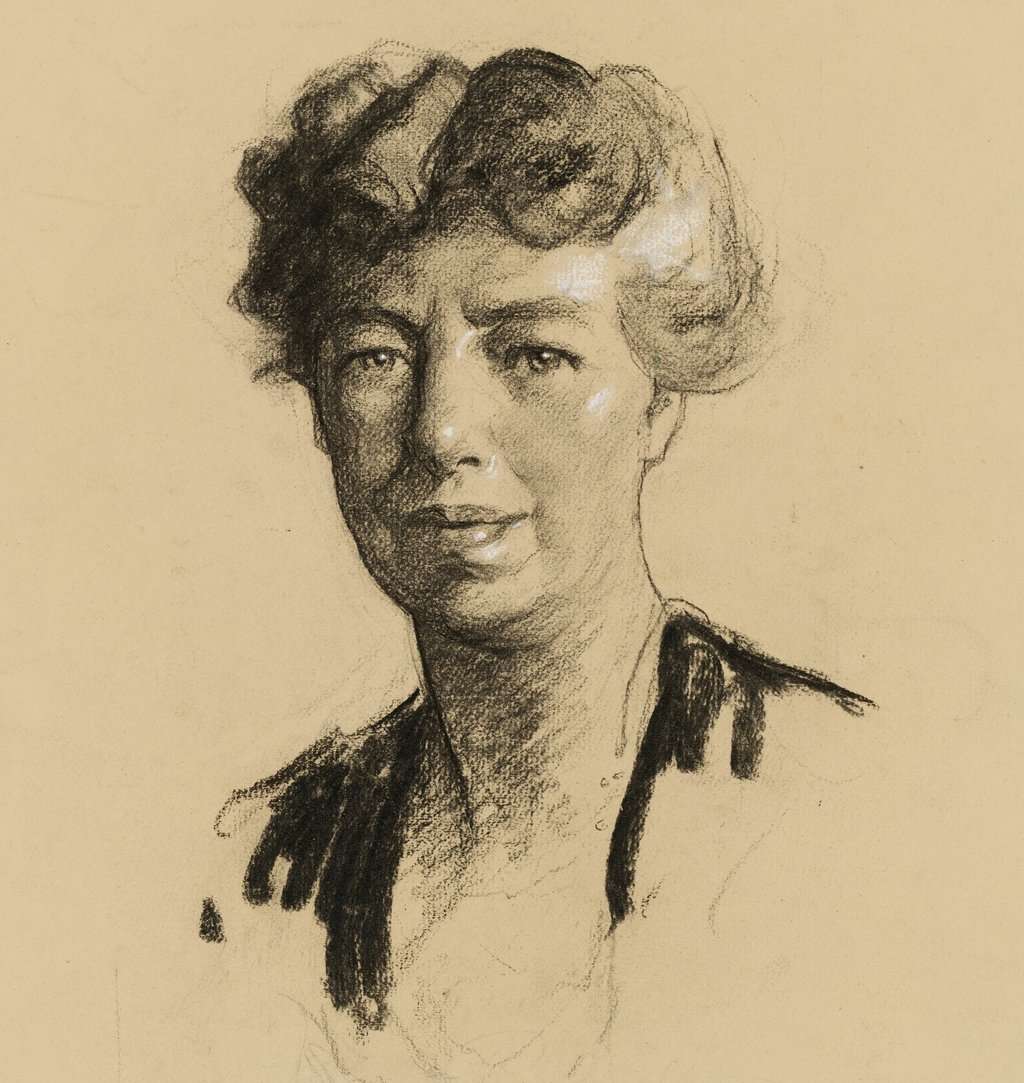
Eleanor Roosevelt (1884 - 1962)
Universal Declaration of Human Rights
Human Rights & Global Governance
First Lady of the World
Eleanor Roosevelt was one of the most influential people of the 1900s, but she didn’t start out confident or powerful. As a shy girl who felt plain and overlooked, she slowly transformed herself into a bold public voice for people who had none.
As First Lady during the Great Depression and World War II, she crisscrossed the country, visiting mines, farms, and factories to see how ordinary people lived, then pushed her husband’s administration to do better. After his death, she took her compassion global, leading the effort at the United Nations to create the Universal Declaration of Human Rights—a worldwide promise that every person deserves dignity, freedom, and a chance to live a decent life.
Biography
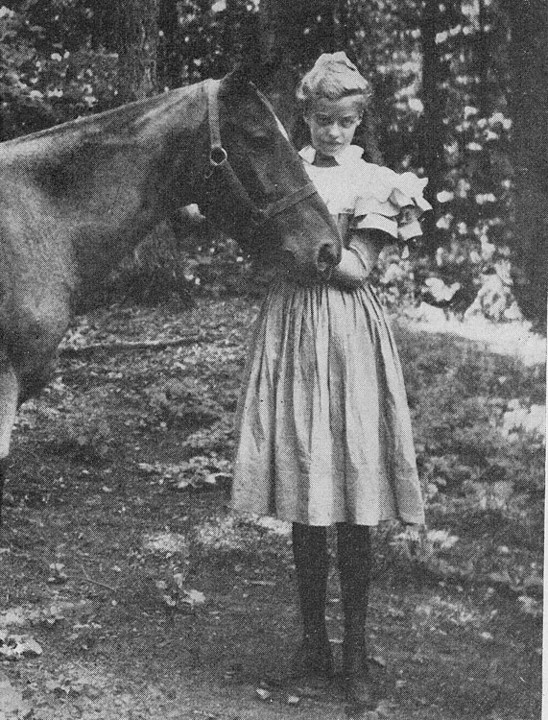
Anna Eleanor Roosevelt was born in 1884 into a very rich and famous New York family, but her childhood was lonely and painful. Her parents died when she was young, and she grew up feeling shy, awkward, and convinced she wasn’t pretty or special.
As a teenager she was sent to a girls’ school in England, where a strong, kind headmistress encouraged her to speak up and care about social issues, not just fancy parties. Eleanor began visiting poor neighborhoods, seeing children who worked instead of going to school and families who could barely survive. Those visits stuck with her. She was still shy, but now she had a quiet fire inside: the world was unfair, and she wanted to change that.
In 1905 Eleanor married her distant cousin Franklin Delano Roosevelt, who would later become President of the United States. At first, she expected to be a fairly traditional wife and mother, but Franklin’s political career pulled her into public life. When Franklin became president in 1933, Eleanor became First Lady during the Great Depression, a time when millions were jobless and desperate.
Instead of just hosting fancy dinners, she traveled constantly, visiting coal mines, farms, and city slums to see how ordinary people lived. She wrote a daily newspaper column called “My Day,” where she talked about problems facing real people and pushed for action. She spoke out for workers’ rights, African Americans facing segregation, and young people who felt forgotten by politicians. People began to call her the conscience of the White House because she kept reminding the government about those who had no power.
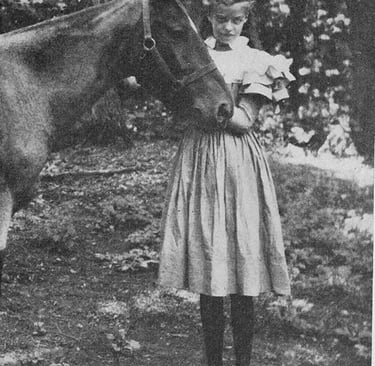
BIBLIOGRAPHY
Amnesty International. “Universal Declaration of Human Rights.”
Bonavero Institute of Human Rights, University of Oxford. “Eleanor Roosevelt and the Universal Declaration of Human Rights.”
FDR Presidential Library and Museum. “Eleanor Roosevelt Biography.”
National Park Service–UN Partnership Page. “Eleanor Roosevelt and the Universal Declaration of Human Rights.”
New-York Historical Society, Women & the American Story. “Life Story: Eleanor Roosevelt (1884–1962).”
United Nations. “Compelled to Act: Eleanor Roosevelt, a Fearful World and an International Vision of Human Rights.” UN Chronicle.
University of Tennessee Law Library. “Universal Declaration of Human Rights (1948): Drafting History.”
Wikipedia. “Drafting of the Universal Declaration of Human Rights.”
Wikipedia. “Eleanor Roosevelt.”
Youth for Human Rights / HumanRights.com. “Champions of Human Rights: Eleanor Roosevelt (1884–1962).”
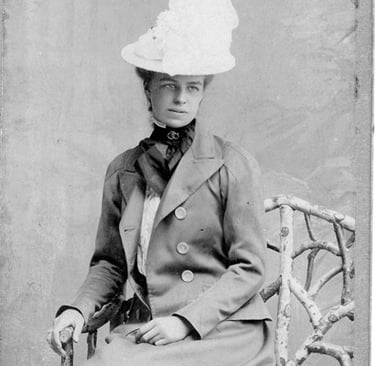
Eleanor Roosevelt
[year unknown]
Franklin D. Roosevelt Library archives.
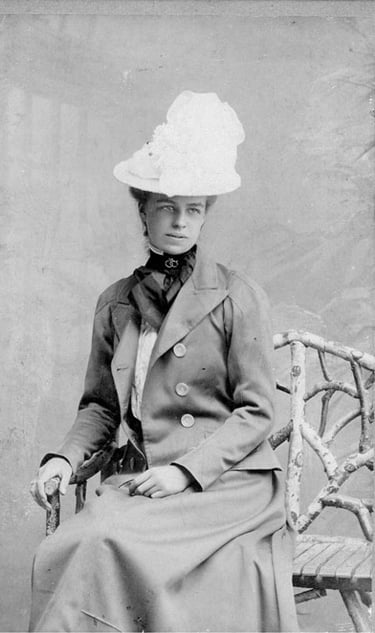
World War II (1939–1945) was the most destructive war in history up to that time. Tens of millions died, cities were bombed to ruins, and Nazi Germany committed horrifying crimes, including the murder of six million Jews in the Holocaust. Eleanor Roosevelt visited soldiers, wounded veterans, and families who had lost loved ones; she saw trauma and grief up close.
When the war ended, people hoped the nightmare was over—but the world still felt dangerous. New nuclear weapons could destroy entire cities in minutes, and old hatreds between countries were turning into the Cold War between the United States and the Soviet Union. Eleanor believed that if the world wanted peace, it needed more than just treaties and weapons; it needed a shared vision of how all human beings should be treated. That idea is what pushed her toward her greatest accomplishment.
In 1945, President Franklin Roosevelt died, and Vice President Harry Truman became president. Many people assumed Eleanor would retire quietly, but Truman surprised her: he asked her to be a U.S. delegate to the brand‑new United Nations (UN), an organization created to help prevent future wars and solve global problems.
Eleanor wasn’t sure she was qualified, but she accepted. At the UN, she was placed on the Social, Cultural and Humanitarian Committee and then chosen to chair the new Commission on Human Rights. This was a big deal: the Commission was supposed to define the basic rights that every person on Earth should have, just because they are human. Many people already called Eleanor “First Lady of the World,” and now she had a chance to live up to that nickname.
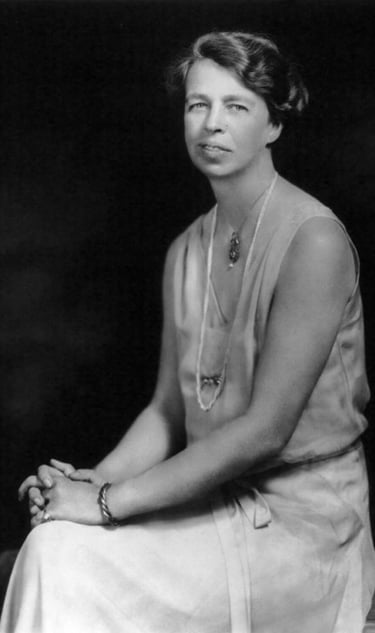
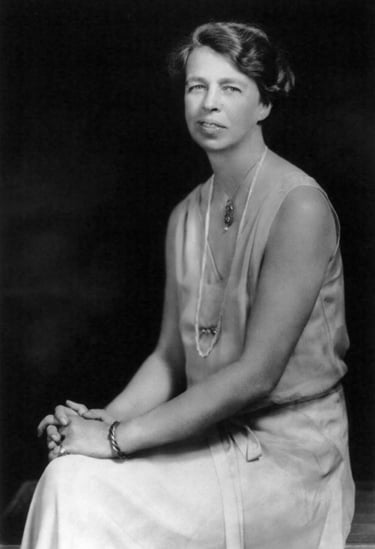
Eleanor Roosevelt (year unknown)
Franklin D. Roosevelt Library Archives
The Universal Declaration of Human Rights (often shortened to UDHR) is a document adopted by the UN General Assembly on December 10, 1948. It lists fundamental rights and freedoms that every person should have, no matter their race, religion, gender, language, or nationality.
These rights include things like the right to life and safety, freedom of speech and religion, the right to work and get fair pay, the right to education, and the right to take part in government. The UDHR is not a law by itself, but it became the foundation for many later human rights treaties and national laws around the world. Eleanor Roosevelt played a central role in making sure this Declaration actually got written, agreed on, and adopted.
As chair of the UN Commission on Human Rights, Eleanor Roosevelt had one of the hardest jobs imaginable: get dozens of countries—each with different cultures, religions, and political systems—to agree on a set of human rights for everyone. Some were democracies, some were colonies, some were communist, and many had totally different ideas about freedom, equality, and government power.
Eleanor helped organize the Commission’s work by suggesting that it be split into three parts: a declaration of human rights, a legal covenant (or treaty) to enforce those rights, and a court to judge violations. This was smart politics. Arguing over a detailed legal treaty could take years, but a declaration—a statement of principles—could be written and agreed on more quickly. Because she had a clear plan, the Commission was able to focus on drafting what became the Universal Declaration of Human Rights.
Writing the Declaration was not like writing a school essay; it was more like trying to write one set of rules that the entire world would accept. The drafting committee included representatives from many countries, like the United States, Lebanon, China, France, Chile, Australia, the Soviet Union, and the United Kingdom. They had different religions, different histories, and different political systems.
Some governments cared mostly about civil and political rights, such as freedom of speech or voting. Others argued that social and economic rights—like the right to a job, housing, and health care—were just as important. There were also debates about whether to mention God, how to talk about family and marriage, and how to make the language apply equally to men and women.
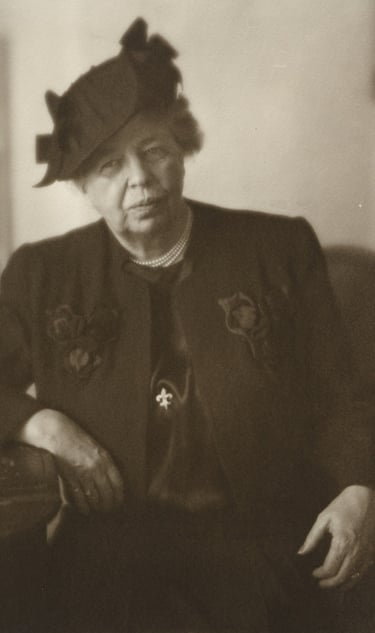
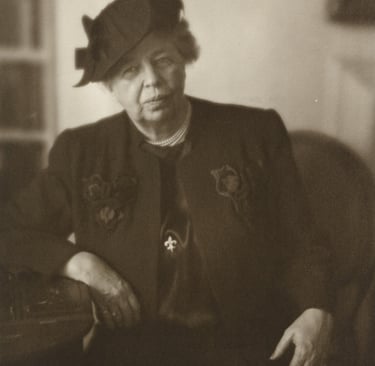
Eleanor Roosevelt (1932)
Library of Congress
Eleanor insisted that the Declaration had to be written in simple, clear language so that ordinary people—not just lawyers and diplomats—could read it and feel that it belonged to them. She kept reminding everyone that the point was not to show off their legal skills, but to create hope after the horrors of war.
Eleanor Roosevelt’s real genius was not just in having ideas; it was in getting people who disagreed to work together. She was patient, but firm. She knew when to let others talk and when to step in to keep meetings on track.
She had three especially tough groups to deal with. First, the United States State Department, which at first wanted a narrower idea of human rights. Second, the Soviet Union and its allies, who were suspicious of anything that looked “too Western” and wanted strong social and economic rights. And third, other UN members, who worried that human rights rules might interfere with their own laws or traditions.
Eleanor pressed the U.S. government to expand its thinking beyond just political and civil rights, insisting that human dignity also required economic, social, and cultural rights. At the same time, she pushed the Soviets not to block the Declaration’s protections for speech, religion, and political participation. She tried to make sure the final document didn’t look like it belonged to one side in the Cold War, but to humanity as a whole.
Eleanor believed that world politics might soon make agreement on human rights impossible. She worried that Harry Truman would not be re‑elected and that she might be removed from the U.S. delegation. So she quietly set herself a deadline: she wanted the Declaration adopted by the end of 1948.
This sense of urgency kept her pushing through endless meetings, late‑night drafting sessions, and arguments over wording. Delegates met in various locations, including Lake Success, New York, where the UN was temporarily headquartered. They reviewed drafts prepared by legal experts like John Humphrey and René Cassin, debated them, and rewrote them again and again. Eleanor was not the main legal author, but she was the guiding force, the one who kept reminding everyone of the moral purpose behind the words.
On December 10, 1948, the UN General Assembly met in Paris to vote on the Universal Declaration of Human Rights. Eleanor Roosevelt presented the final text to the Assembly, urging delegates to think about the millions of people who had suffered in the war and to see the Declaration as a first step toward a more just world.
The result was dramatic but hopeful. No country voted against the Declaration. Forty‑eight nations voted in favor, and eight abstained (they chose not to support it, but also not to oppose it). For such a divided world, this was a remarkable achievement. Eleanor later said that helping create and pass the Universal Declaration of Human Rights was one of the greatest accomplishments of her life.
The UDHR begins with a powerful preamble that talks about “the inherent dignity” and “equal and inalienable rights of all members of the human family.” Then it lists 30 articles (sections), each describing a different right. Here are some key articles and what they mean in plain language. First, Article 1 stated: “All human beings are born free and equal in dignity and rights.” Second, Articles 2–7 stated: “Everyone deserves equal protection under the law and freedom from discrimination and unfair treatment.” Then, Articles 18–21 stated, “People have freedom of thought, conscience, and religion; freedom of opinion and expression; and the right to take part in government and free elections.” Finally, Articles 22–26 decided that “People have the right to social security, work, rest and leisure, an adequate standard of living, and education.”
Eleanor was especially proud that the Declaration recognized both “freedom from fear” and “freedom from want” as essential. In other words, it wasn’t enough for people to be safe from violence; they also needed basic economic security and opportunities to live decent lives.
If you read parts of the Declaration today, you might notice that the language is formal, but it is still surprisingly clear compared with many legal documents. That is not an accident. Eleanor pushed hard for the text to be accessible, because she wanted regular people—teachers, factory workers, students, parents—to read it and say, “These are my rights.”
She also helped connect the Declaration to everyday life. Back in the United States, she gave speeches, wrote columns, and held workshops explaining what human rights meant in practice. At her Val‑Kill cottage in New York, she hosted civil rights activists, students, and visitors from around the world, turning her home into a kind of classroom for non‑violent social change. She believed that documents alone do nothing; people have to understand them and use them.
Eleanor Roosevelt did not see human rights as just an international issue; she also saw them in her own country’s struggles with racism and inequality. Long before the UDHR, she had publicly supported African American singer Marian Anderson when Anderson was banned from performing in a hall because of her race; Eleanor resigned from the organization that ran the hall in protest.
After the Declaration was adopted, Eleanor kept connecting global human rights to the civil rights movement in the United States. She backed activists who were fighting segregation, supported labor organizers, and encouraged “non‑violent civil disobedience” as a way to challenge unjust laws. In her mind, the UDHR was not just about foreign countries; it was a mirror that Americans should hold up to themselves and their own society.
Eleanor also recognized that women’s rights were a crucial part of human rights. During the drafting of the UDHR, representatives from the UN Commission on the Status of Women participated in debates to make sure the language was gender‑inclusive. Eleanor supported efforts to talk about “everyone” and “all human beings” in ways that clearly included women, not just men.
Later, under President John F. Kennedy, she chaired the first U.S. Presidential Commission on the Status of Women, which studied how to improve women’s opportunities in work, education, and public life. She spent her final years pressing political leaders to appoint more women to important government positions and to take women’s voices seriously. For her, the UDHR’s promise of equality was incomplete unless women shared fully in it.
Even after the UDHR was adopted, Eleanor Roosevelt did not slow down. She continued to serve at the United Nations for several more years, defending the Declaration and encouraging countries to live up to their standards. When critics attacked the UN or claimed human rights were just “words on paper,” Eleanor argued that the Declaration was a moral guide that could inspire change over time.
She traveled widely, met with leaders, students, activists, and ordinary citizens, and kept writing her “My Day” column until shortly before her death in 1962. In many countries she visited, she was welcomed not just as a former First Lady, but as a symbol of global conscience and hope. The nickname “First Lady of the World” felt more and more accurate.
The Universal Declaration of Human Rights has become one of the most translated documents in the world and has influenced many national constitutions, laws, and international treaties. Organizations like Amnesty International and many others use it as a standard to judge whether governments are respecting or violating human rights.
Of course, the world still has violence, poverty, discrimination, and authoritarian governments. But when people protest unfair arrests, censorship, or abuse, they often use the language of the UDHR: rights, dignity, equality, freedom. In that sense, Eleanor Roosevelt’s work is still alive in speeches, court cases, protests, and classrooms around the globe.
Eleanor Roosevelt died in 1962, but her legacy continues in many ways. The UN still celebrates December 10 as Human Rights Day, marking the adoption of the Universal Declaration of Human Rights. Schools, museums, and human rights organizations regularly feature her as a key figure in the history of human rights.
She is remembered as a woman who started life feeling shy and insecure yet grew into a global leader who helped give the world a shared moral compass. Her work teaches that you don’t have to be born confident or powerful to change history; you need courage, persistence, and a belief that every person’s life has value.
Eleanor Roosevelt (1949)
Smithsonian National Portrait Gallery
HerWorldNow.com
Learn about women's voices today
© 2026 Sarina Singhal. All rights reserved.