Generation Equality Forum: Closing the Gender Gap
This article explores the origins, mechanics, and tangible outcomes of the Generation Equality Forum (GEF). It traces the journey from the 1995 Beijing Declaration to the current five-year action plan (2021–2026), analyzing how this multi-stakeholder model is attempting to close the gender gap in an era of global volatility.
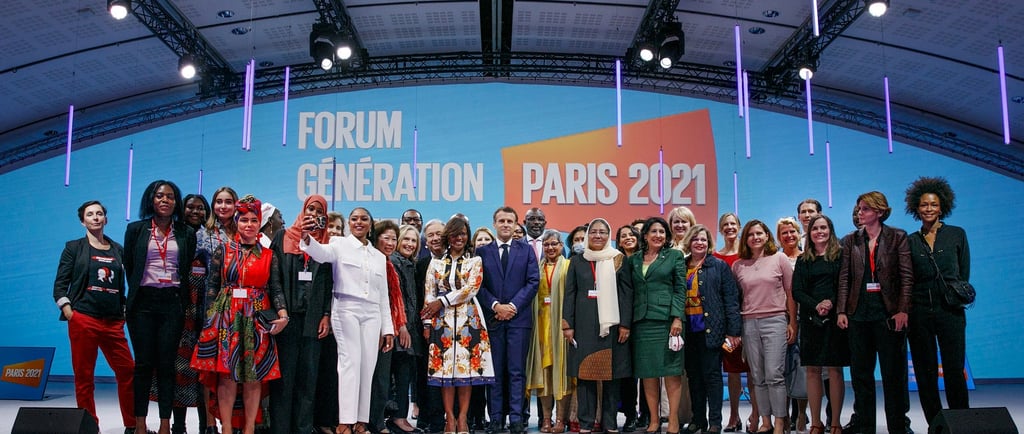
Delegates and stakeholders at the Generation Equality Forum in Paris, June 2021. Photo by UN Women/Flickr
The Architecture of Ambition:
The Generation Equality Forum and the Future of Gender Justice
The quest for gender equality has long been characterized by a paradox of high-level diplomatic consensus and sluggish ground-level implementation. In 1995, the Fourth World Conference on Women in Beijing produced what remains the most visionary blueprint for women’s rights: the Beijing Declaration and Platform for Action. Yet, decades later, no country has fully achieved gender equality. Recognizing that the traditional intergovernmental process was moving too slowly to meet the 2030 Sustainable Development Goals, UN Women, in partnership with the governments of France and Mexico, launched the Generation Equality Forum (GEF) in 2021. This initiative was designed not as a standard UN summit, but as a disruptive, multi-stakeholder engine for "irreversible progress."
A New Paradigm: Beyond Diplomatic Rhetoric
The GEF represents a fundamental shift in how the United Nations approaches systemic change. Historically, UN mandates relied heavily on member-state treaties and voluntary reporting. The GEF, however, introduced the "Action Coalition" model. This framework brought together diverse actors—civil society, youth-led organizations, the private sector, and governments—to work as equals. By dismantling the hierarchy of traditional diplomacy, the Forum aimed to mobilize the agility of the private sector and the lived expertise of grassroots activists.
The timing of the Forum was both precarious and necessary. Launched amidst the COVID-19 pandemic, it faced a world where the "shadow pandemic" of domestic violence was surging, and women’s labor force participation was retreating to levels not seen in decades. The GEF was framed as a "Marshall Plan" for gender equality, intended to counteract this regression through massive financial mobilization and concrete policy shifts.
The Six Pillars of Transformation
At the heart of the GEF are six Action Coalitions, each targeting a specific nexus of inequality. These coalitions are not merely discussion groups; they are structured to deliver a "Global Acceleration Plan" over a five-year horizon.
Gender-Based Violence (GBV): This coalition focuses on the systemic eradication of violence through comprehensive laws and survivor-centered services. It has successfully mobilized over $8.5 billion to scale up prevention programs.
Economic Justice and Rights: Recognizing that poverty is feminized, this pillar targets the "care economy," equal pay, and access to land and resources. With over $30 billion in pledges, it is the most heavily funded sector of the Forum.
Bodily Autonomy and Sexual and Reproductive Health and Rights (SRHR): In an era of shrinking civic space and threats to reproductive freedom, this coalition reinforces the right of women and girls to make decisions about their own bodies.
Feminist Action for Climate Justice: This pillar bridges the gap between environmental policy and gender, ensuring that women—who are disproportionately affected by climate disasters—are at the center of the green transition.
Technology and Innovation: As the world goes digital, this coalition works to close the "gender digital divide," ensuring women are creators, not just consumers, of technology.
Feminist Movements and Leadership: This serves as the foundational pillar, providing direct funding to grassroots organizations that are often the first responders to crises but the last to receive institutional support.
This article explores the origins, mechanics, and tangible outcomes of the Generation Equality Forum (GEF). It traces the journey from the 1995 Beijing Declaration to the current five-year action plan (2021–2026), analyzing how this multi-stakeholder model is attempting to close the gender gap in an era of global volatility.
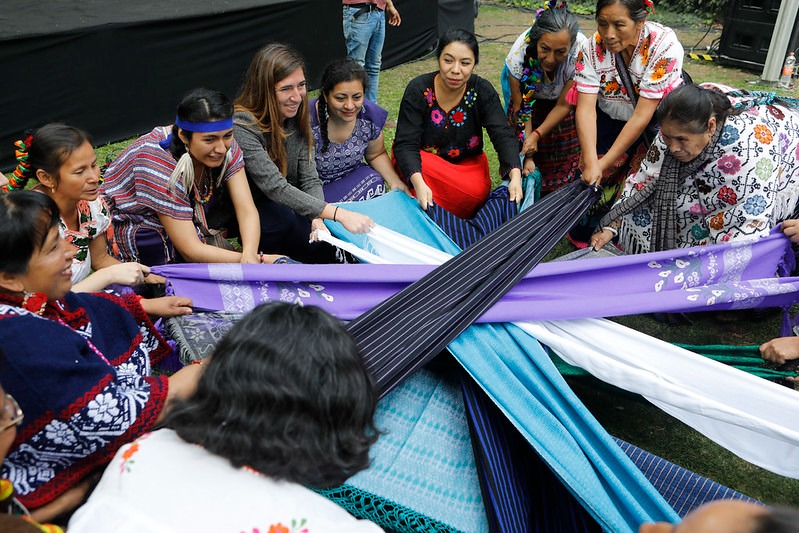
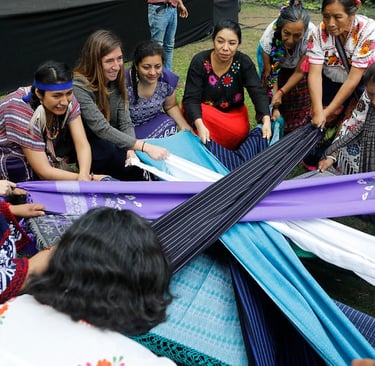
Participants and activists at the Generation Equality Forum in Mexico City, March 2021.
Photo by UN Women/Flickr
From Pledges to Practice: Measuring Outcomes
The true measure of any UN initiative lies in its accountability. As of the 2024 reporting cycle, the GEF has demonstrated a remarkable ability to convert promises into action. Of the $50.3 billion currently pledged, over $40 billion has been formally secured, and nearly $22 billion has already been spent on programs. This level of financial transparency is unprecedented in global gender advocacy.
The impact is seen most clearly in policy shifts. In 2023 alone, the initiative catalyzed nearly 2,000 new or scaled-up policies. For example, in West Africa, the GEF’s influence was instrumental in protecting existing legal frameworks against female genital mutilation (FGM). In the corporate sector, major tech firms have committed to data transparency regarding the gender pay gap, moving beyond "pink-washed" marketing toward structural reform.
Furthermore, the Forum has prioritized youth leadership. Unlike previous generations where youth were invited as observers, the GEF integrates young activists into the governance of the Action Coalitions. This ensures that the solutions designed today are relevant to the generation that will inherit them.
The Road to 2026 and Beyond
While the statistics are promising, significant challenges remain. The rise of anti-rights movements globally threatens to roll back the progress made by the SRHR and GBV coalitions. Additionally, the "funding gap" for feminist organizations persists; while billions have been pledged, ensuring that these funds reach the smallest, most marginalized grassroots groups remains a logistical hurdle.
As the GEF moves toward its 2026 conclusion, the focus is shifting from "mobilization" to "institutionalization." The goal is to ensure that the mechanisms created—such as the gender-responsive budgeting and the multi-stakeholder partnerships—become the standard operating procedure for the UN and its partners.
Conclusion
The Generation Equality Forum is more than a series of summits; it is a testament to the power of collective action. By moving away from a state-centric model and embracing a diverse coalition of actors, it has created a more resilient and funded path toward justice. The success of the GEF suggests that while the road to equality is long, it can be significantly shortened when financial resources, political will, and grassroots expertise are aligned. As the world watches the 2026 horizon, the Forum stands as a beacon of hope—a proof of concept that a gender-equal world is not a utopia, but a measurable, fundable, and achievable reality.
Bibliography
Primary UN Sources:
UN Women (2021). The Global Acceleration Plan for Gender Equality. United Nations.
UN Women (2023). Generation Equality Accountability Report 2023: Progress, Challenges, and the Way Forward.
UN Women (2024). 2024 Accountability Report: Breaking Records in Gender Equality Commitments. [Press Release/Digital Report].
Governmental & Institutional Reports:
Government of France (2021). The Paris Declaration: Final Report of the Generation Equality Forum. Ministry for Europe and Foreign Affairs.
Government of Mexico (2021). Mexico City Forum: Defining the Pillars of Action. Secretariat of Foreign Affairs.
Scholarly & Policy Analysis:
Aparicio, M. & Smith, J. (2022). "Multi-Stakeholder Diplomacy: The Case of the Generation Equality Forum." Journal of International Gender Policy, 14(2), 112-129.
Grown, C. (2021). "Financing for Gender Equality: Can the $40 Billion Promise be Kept?" Brookings Institution Global Economy and Development Series.
International Center for Research on Women (ICRW) (2023). Tracking the Pledges: An Independent Review of Action Coalition Commitments.
Digital Accountability Platforms:
Generation Equality Commitment Map (2024). commitments.generationequality.org
Women, Peace and Security and Humanitarian Action (WPS-HA) Compact (2024). Annual Monitoring Report.
HerWorldNow.com
Learn about women's voices today
© 2026 Sarina Singhal. All rights reserved.