The Representation Project
The Representation Project is a nonprofit founded in 2011 by Jennifer Siebel Newsom to challenge harmful gender stereotypes in media and culture.
1/9/2025
The Representation Project is a nonprofit founded in 2011 by Jennifer Siebel Newsom to challenge harmful gender stereotypes in media and culture. Emerging from the documentary Miss Representation, the organization uses films, educational curricula, and social action campaigns to promote gender equity and media literacy. Through projects like The Mask You Live In, it addresses how rigid norms affect both women and men. Reaching millions through screenings, classrooms, and digital activism, the project has helped spark national conversations about representation, leadership, and cultural change while advocating for more equitable and inclusive storytelling.
The Representation Project: Media, Gender, and Cultural Change
In the early twenty-first century, debates about gender equality increasingly turned toward media representation: how women, men, and gender-diverse people are portrayed in film, television, advertising, news, and digital culture—and how those portrayals shape ambition, self-image, and public life. At the center of this conversation stands The Representation Project, a U.S.-based nonprofit founded in 2011 by filmmaker and activist Jennifer Siebel Newsom. Emerging from the success of the documentary Miss Representation, the organization has sought to expose harmful gender stereotypes, foster media literacy, and mobilize cultural change through storytelling, education, and advocacy. Over more than a decade, The Representation Project has expanded its work through additional films, social action campaigns, and youth programs, generating measurable reach and sparking both praise and critique. Taken together, its trajectory offers a revealing case study of how media activism can influence public discourse and institutional practice.
The origins of The Representation Project lie in Siebel Newsom’s experience within the entertainment industry and her growing concern about how women and girls were depicted in mainstream media. Released in 2011, Miss Representation investigates the underrepresentation of women in positions of power and the ways in which media culture often prioritizes women’s appearance over their competence or leadership. The film features interviews with politicians, journalists, educators, and young people, weaving personal testimony with data on gender disparities in government, corporate leadership, and media production. Its core argument is straightforward but provocative: when girls grow up immersed in media that objectifies women and sidelines their authority, their ambitions narrow, and society as a whole loses potential leaders.
The documentary resonated widely, screening at festivals, schools, and community organizations across the United States and internationally. Recognizing that a single film could catalyze conversation but not sustain structural change, Siebel Newsom founded The Representation Project to transform cinematic storytelling into an ongoing movement. The organization’s mission centers on challenging limiting gender norms and building a more just and equitable culture. Rather than focusing solely on policy reform, it operates at the intersection of media, education, and grassroots activism, premised on the belief that cultural narratives shape political and economic realities.
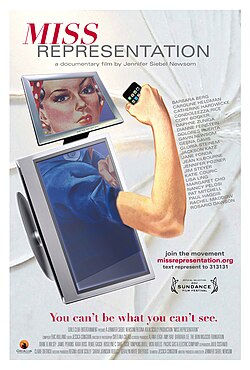
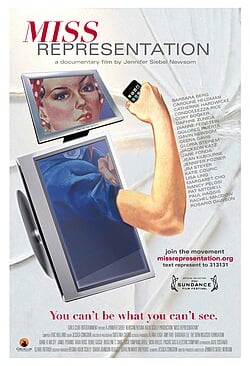
Miss Representation film, promotional poster. (image from Wikipedia: Miss Representation)
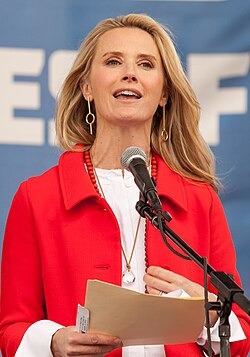
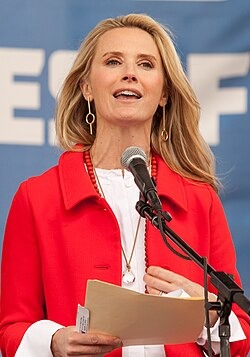
Siebel Newsom in 2018
(image from Wikipedia: Jennifer Siebel Newsom)
Following Miss Representation, the organization broadened its lens with additional documentaries. In 2015, it released The Mask You Live In, which turns attention to boys and men. The film examines how rigid expectations of masculinity—stoicism, dominance, emotional suppression—can harm boys’ mental health and constrain their relationships. By highlighting the pressures placed on boys to “man up” and avoid vulnerability, the documentary extends the organization’s central thesis: gender stereotypes damage everyone. This framing helped situate gender equality not as a “women’s issue,” but as a societal concern affecting people across the gender spectrum.
Subsequent films continued to explore systemic inequities. The Great American Lie interrogates economic inequality and the myth of meritocracy in the United States, connecting gender representation to broader structures of race and class. In 2022, Fair Play examined the unequal division of unpaid domestic labor, especially among heterosexual couples, and its impact on women’s professional advancement and well-being. Together, these films illustrate an evolution from a singular focus on media portrayals of women to a more expansive critique of interconnected social systems.
Central to The Representation Project’s strategy is the pairing of films with educational curricula. Rather than treating documentaries as standalone cultural products, the organization has developed discussion guides, lesson plans, and classroom materials designed to foster critical media literacy. Educators can access these resources to facilitate conversations about stereotypes, leadership, emotional expression, and structural inequality. By integrating media analysis into classroom settings, the organization aims to equip young people with tools to question the narratives they consume and to imagine alternative forms of representation.
The reported reach of these educational efforts is significant. The Representation Project states that its curricula and programming have reached millions of students across the United States and beyond. Screenings of its films have occurred in middle schools, high schools, universities, corporations, and community centers. While precise impact assessment in cultural work is notoriously complex, surveys conducted in connection with Miss Representation screenings have suggested shifts in students’ awareness of media bias and increased willingness to challenge sexist or stereotypical commentary. Such self-reported changes do not necessarily translate into long-term behavioral transformation, but they do indicate that exposure to structured media critique can influence attitudes in measurable ways.
Beyond classrooms, The Representation Project has leveraged digital platforms to mobilize public engagement. Its social action campaigns have used hashtags and online organizing to call attention to everyday instances of gender bias. One of the most visible campaigns, #AskHerMore, encouraged journalists covering red carpet events to ask female celebrities substantive questions about their work and achievements rather than focusing primarily on fashion and appearance. The campaign gained traction on social media, prompting conversations about how media coverage can trivialize women’s professional accomplishments. Although it is difficult to attribute shifts in journalistic practice to a single campaign, observers have noted a gradual increase in more substantive interviews with women in entertainment and politics.
Another initiative, #NotBuyingIt, targeted sexist advertising and encouraged consumers to call out brands that relied on outdated or harmful gender tropes. By amplifying critiques online and tagging companies directly, supporters sought to create reputational incentives for advertisers to reconsider their messaging. In an era when corporations are highly sensitive to public perception, such digital activism can influence marketing strategies. While comprehensive data on corporate change is limited, anecdotal evidence suggests that some brands adjusted campaigns in response to public backlash amplified by these efforts.
The organization’s work has unfolded within a broader cultural moment marked by movements such as #MeToo, which spotlighted sexual harassment and gender-based power imbalances. Although The Representation Project did not initiate #MeToo, its longstanding emphasis on media representation and gender norms helped cultivate an environment in which conversations about sexism, objectification, and structural inequality gained mainstream traction. By foregrounding the link between representation and power, the organization contributed to a vocabulary through which audiences could analyze and critique cultural patterns.
In addition to films and campaigns, The Representation Project has invested in youth leadership and media creation programs. Initiatives such as youth media labs aim to empower young people to produce their own content that challenges stereotypes and tells more inclusive stories. This shift from critique to creation reflects an understanding that representation is not only about dismantling harmful images but also about building new narratives. By equipping youth with storytelling skills, the organization attempts to democratize media production and diversify whose voices are heard.
Despite its achievements, The Representation Project has not been without controversy. Critics have raised questions about nonprofit governance, financial transparency, and the blending of advocacy with educational materials. Some have argued that the organization’s curricula reflect a particular ideological perspective and should be scrutinized within public school contexts. Others have examined compensation structures and organizational leadership, particularly given Siebel Newsom’s public profile and political connections. Such critiques underscore the challenges faced by advocacy nonprofits operating in polarized environments: efforts to reshape cultural norms often attract both fervent support and pointed skepticism.
Evaluating the outcomes of The Representation Project requires distinguishing between direct, measurable impacts and broader cultural influence. On a quantitative level, the organization can point to viewership numbers, social media impressions, and the distribution of educational materials. These metrics indicate substantial reach. On a qualitative level, its films have become touchstones in discussions about gender and media, frequently screened in academic courses and cited in public debates. The organization has also helped normalize media literacy as a crucial component of gender equality work.
More difficult to assess are long-term structural outcomes. Gender disparities in political representation, corporate leadership, and media ownership persist. Harmful stereotypes have by no means disappeared from advertising or entertainment. Yet cultural change is incremental and nonlinear. The Representation Project operates within a larger ecosystem of activists, scholars, journalists, and policymakers working toward gender justice. Its contribution lies less in singular policy victories than in shifting narratives—making it more commonplace to question why women are underrepresented on corporate boards, why boys are discouraged from emotional expression, or why unpaid care work remains invisible.
Ultimately, The Representation Project exemplifies a model of media-based social change that combines storytelling, education, and digital activism. By transforming documentary films into catalysts for dialogue and action, the organization has sought to bridge the gap between awareness and engagement. Its efforts have reached millions, influenced public conversation, and encouraged both individuals and institutions to reconsider how gender is portrayed and valued. Whether one views its approach as visionary or ideological, its impact on the contemporary discourse around representation is undeniable. In a media-saturated society, the stories told about who matters—and who leads—carry profound consequences. The Representation Project’s enduring contribution has been to insist that those stories are neither neutral nor inevitable, and that reshaping them is both possible and necessary.
Bibliography
The Representation Project. About The Representation Project. Accessed 2026. https://therepproject.org/about/
Siebel Newsom, Jennifer, director. Miss Representation. 2011.
Siebel Newsom, Jennifer, director. The Mask You Live In. 2015.
Siebel Newsom, Jennifer, director. The Great American Lie. 2019.
Siebel Newsom, Jennifer, director. Fair Play. 2022.
The Representation Project. Educational Resources and Curriculum Guides. Accessed 2026. https://therepproject.org/education/
InfluenceWatch. “The Representation Project.” Accessed 2026. https://www.influencewatch.org/non-profit/representation-project/
HerWorldNow.com
Learn about women's voices today
© 2026 Sarina Singhal. All rights reserved.